Key Takeaways
- The SaaS reckoning is not about the death of SaaS. It is about customers confronting the widening gap between what software companies promised and the value their platforms actually deliver.
- After years of forcing businesses to adapt to rigid, overextended platforms, software companies are being challenged by products that are more adaptive, contextual and aligned with how people actually work.
To be clear from the outset, this is not an argument that all software is bad. Plenty of software companies build excellent products that solve important problems, deliver real value and create genuinely good user experiences.
It is also not a piece about the economics of the software industry. Those issues are important, but they are outcomes, not the reason why certain SaaS companies are struggling.
This is a broader market observation focused on the causality behind what is happening.
The phrase “SaaS apocalypse” has become a convenient way to describe the trouble facing software companies. It is often used in conversations about slowing growth, declining valuations, private-equity ownership and the threat posed by artificial intelligence.
I think a “SaaS reckoning,” a moment of accountability and correction, is more appropriate.
SaaS has not failed as a business model. Quite the opposite. Software delivered over the internet has transformed how companies operate. It has made sophisticated capabilities more accessible, helped automate work and enabled organizations to manage complexity at a scale that was previously impossible.
But there has always been an expanding gap between what enterprise software promises and what many organizations actually realize.
Ask the average customer whether they have achieved the outcomes they were promised when they purchased a major software platform. Few would confidently give it a high score.
That gap is not always the result of poor implementation. In many cases, it is built into the way enterprise software has been designed and sold.
Many would describe the software as useful but difficult, powerful but underused, necessary but frustrating. They may be paying for hundreds of features and using only a fraction of them while still relying on spreadsheets, email and manual workarounds to get the job done.
The strife currently plaguing many SaaS organizations is that much of the enterprise software companies have purchased over the past 10 to 15 years simply has not delivered the value they were promised.
The Adaptation Tax
To get the full value from a major software platform, a company needs more than a license.
It needs time to learn the system. It needs administrators to maintain it. It needs teams to manage permissions, integrations, workflows and upgrades. It needs training, governance and ongoing support.
Most important, it often needs to reshape the business around the software.
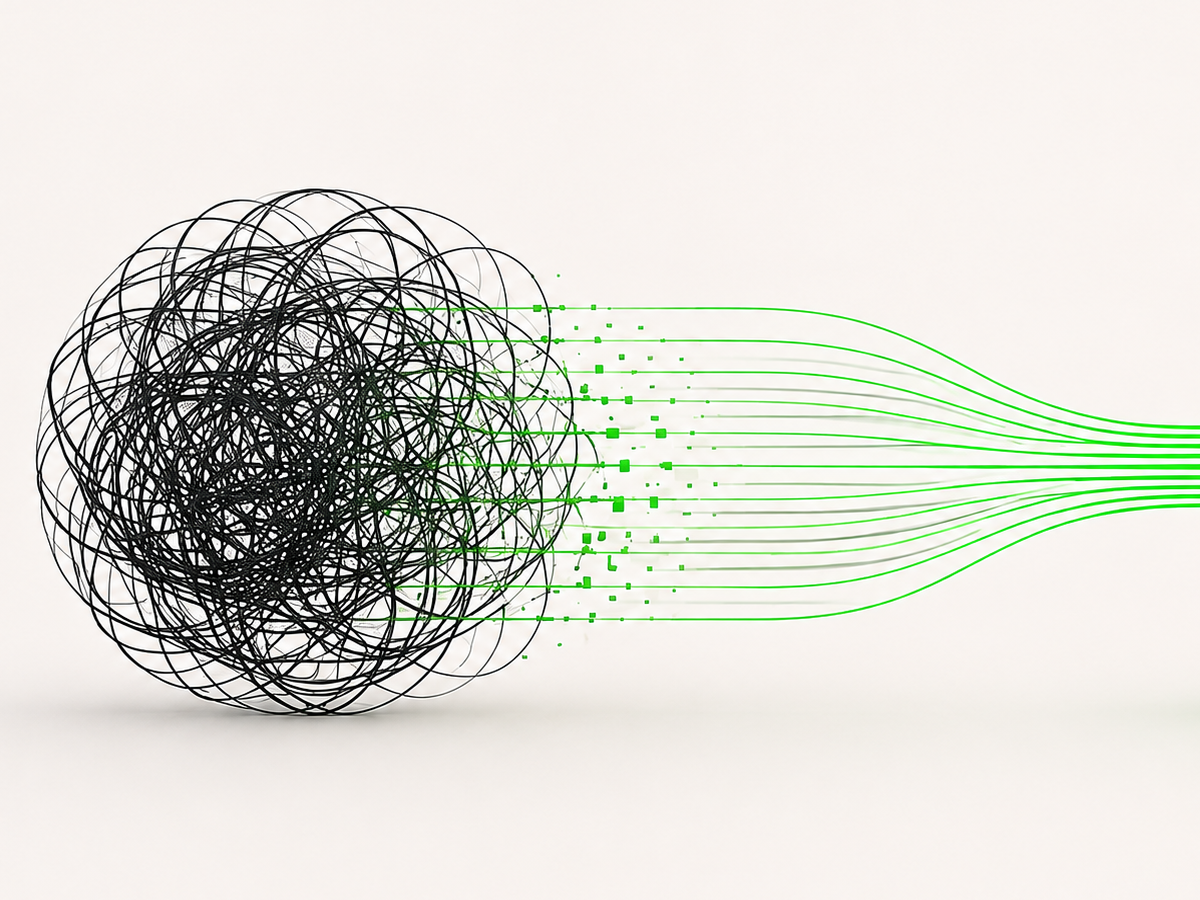
This is the central problem with much of enterprise SaaS. The software promises to adapt to the business, but the business ends up adapting to the software.
The customer pays an adaptation tax through extra meetings, complex implementation projects, training programs, consulting fees, manual workarounds and processes that exist primarily because the platform requires them.
A platform may be described as customizable, but customization within a rigid framework is not the same as genuine adaptability. Customers can configure fields, modify workflows and select from a wide range of features, but only within boundaries established by the vendor.
The platform remains at the center. The business is expected to come to it.
Over time, software becomes less like a tool and more like an institution. Employees stop asking, “What is the best way to do this?” They start asking, “Can we do this in the system?”.
That distinction matters because software is supposed to make work easier, not require the organization to reorganize itself around the limitations of the software.
When Expansion Outruns Competence
The problem has been made worse by the way many software companies position their products.
Enterprise platforms often claim they can do everything. They promise to manage the customer relationship, automate marketing, support sales, run analytics, coordinate service, govern data and connect the entire organization.
Sometimes they can.
More often, they do some things exceptionally well, other things adequately and still others poorly, awkwardly or not at all.
That breadth can be attractive during the buying process. Companies want fewer vendors, fewer integrations and a more unified technology stack. A single platform appears to offer simplicity.
But the reality is often a collection of uneven capabilities hidden behind a powerful brand and a broad product catalog. Customers may buy into the promise of one connected system, only to discover that certain functions require additional products, extensive customization or processes outside the platform altogether.
This has created growing market distrust.
Customers have become more skeptical of claims that a platform is flexible, intelligent, easy to use or capable of serving every need. They have learned that a long feature list does not necessarily translate into a good experience or the value they were promised.
A product can technically “do” something without doing it well.
That distinction is increasingly important.
AI Did Not Create the Problem
The rise of AI-native applications is often described as a threat to traditional SaaS. That is true, but it is not the complete story.
AI did not suddenly make customers impatient with complicated software. It gave them a direct comparison.
For years, users were told that enterprise software had to be difficult. They were expected to navigate menus, configure dashboards, learn specialized interfaces and follow predefined workflows.
Then they began using AI applications that could understand natural language, infer intent and respond in a more personal way.
People started asking why finding information at work or executing a task had to feel harder than asking ChatGPT a question. They began to wonder why their business software could not understand context, anticipate what they needed or adapt to the way they actually worked.
The important distinction is not SaaS versus AI.
SaaS is primarily a delivery and commercial model. It describes software hosted by a provider and accessed as a service, generally through a subscription. AI-native describes how a product is built and how users interact with it.
Many AI applications are SaaS products. Many are also effectively AI infrastructure as a service. These categories overlap.
The more meaningful distinction is between rigid software and adaptive software.
Traditional SaaS generally asks the user to learn the system. AI-native software is increasingly expected to learn the user.
That is why these products can feel so different. They reduce the distance between what a person wants to accomplish and what the software requires that person to do.
The Next Software Winners
None of what follows is particularly new. Personalization, context, usability and customer-centric design have been discussed for decades.
These are basic principles of good software and good business. They always will be, and they are more important than the technology used to deliver them.
But they are principles many companies have lost sight of as their platforms expanded, their organizations became more complex and their focus shifted from serving users to selling more capabilities.
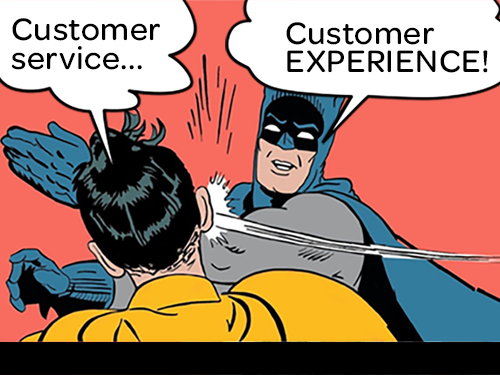
The eventual winners will not be determined solely by who has the most advanced model, the largest data set or the biggest research budget. They will be determined by who delivers the best experience.
The SaaS reckoning is fundamentally a story about customers finally having better alternatives.
For years, businesses tolerated software that was expensive, complicated and difficult to use because they had few choices. Now they are experiencing products that are faster, more flexible and more aligned with the way they think and work.
The old compromises are becoming harder to defend.
The future of software will belong to companies that understand a basic truth: The best software does not force people to become experts in the software. It makes people more effective at their actual jobs.
Write to Keith Pine at keith@fabric.cx.